

The litigation discovery process explained simply: discovery is the court‑supervised exchange of relevant information between parties before trial. It includes listing and sharing documents, answering questions under oath, and narrowing issues so cases resolve faster or proceed to trial on a clear record. Done right, discovery protects your case and avoids costly surprises.
Quick Answer
The litigation discovery process explained: it’s the structured exchange of documents and testimony that proves or refutes claims. From our Mississauga office at 6750 Davand Dr., we help GTA clients organize disclosure, conduct examinations, and manage undertakings so your civil or family case stays proportional, efficient, and trial‑ready.
At a Glance
Discovery verifies facts, tests credibility, and narrows issues using document exchange and sworn questioning. Expect an affidavit of documents, e‑discovery where needed, examinations for discovery, undertakings follow‑up, and targeted motions only when necessary. With a clear plan and timelines, discovery reduces risk and positions you for resolution or trial.
- What you’ll learn:
- What discovery is and how Ontario’s Rules structure it
- Why discovery drives case outcomes in civil and family matters
- Step‑by‑step stages, timelines, and responsibilities
- Document, oral, inspection, and request‑to‑admit methods
- Best practices: proportionality, privilege, and confidentiality
- Tools for e‑discovery, litigation holds, and transcript control
- Real‑world examples from family, employment, and real estate disputes
- Who this helps:
- Individuals and families navigating separation and parenting disputes
- Employees and employers in wrongful dismissal or workplace claims
- Homebuyers, sellers, and realtors involved in real estate litigation
- Small businesses facing contract or debt claims
- Fast facts:
- Small Claims Court in Ontario (up to $35,000) has no discovery—cases move from pleadings to settlement conference to trial.
- Under the Simplified Procedure (Rule 76), oral discoveries are not available, which streamlines disclosure and trial scheduling.
- Well‑planned discovery can shorten trials by focusing only on genuinely disputed facts.
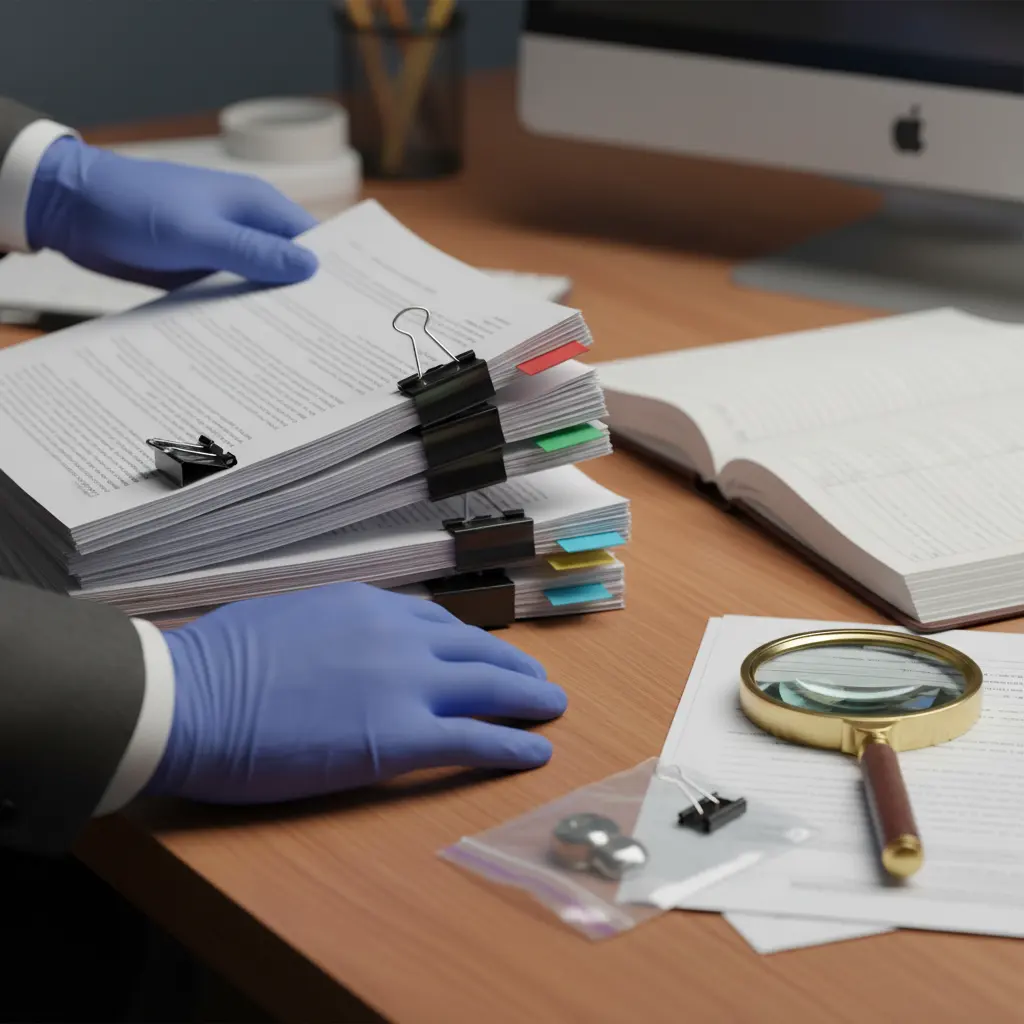
What Is the Litigation Discovery Process?
Discovery is the pre‑trial fact‑finding phase where parties disclose relevant documents, answer questions under oath, and narrow the issues. In Ontario, Rules 30–33 and 51 guide document exchange, oral examinations, property or medical inspections, and requests to admit—ensuring fair trials and encouraging earlier resolution.
- Core definition:
- Discovery is a court‑governed exchange of relevant, non‑privileged information.
- It applies across civil actions and, with tailored rules, in family proceedings.
- Its purpose is truth‑seeking, efficiency, and fairness.
- Key Ontario frameworks:
- Rules of Civil Procedure: Rule 30 (documents), Rule 31 (examinations), Rule 32 (inspection), Rule 33 (medical exams), Rule 51 (requests to admit).
- Family Law Rules: mandatory financial disclosure and continuing duty to update in parenting/support matters.
- Simplified Procedure (Rule 76): no oral discoveries, encouraging proportionate, paper‑driven disclosure.
- Outcomes discovery enables:
- Earlier settlements when facts become clear
- Narrower trials with fewer issues and witnesses
- Credibility testing that shapes negotiation leverage
- Example (GTA family case):
- Parents exchange income documents, parenting records, and communications.
- Sworn questioning narrows disputes about schedules and decision‑making responsibility.
- The file resolves at a case conference with consent minutes based on clarified facts.
When working with clients in Mississauga and the wider GTA, we align discovery to your goals: early resolution where possible, or trial‑ready records where necessary.
Why Discovery Matters to Your Case
Discovery matters because it determines what evidence the court will likely hear and shapes negotiation leverage. Thorough, proportional disclosure reduces surprises, curbs legal spend, and positions you for mediation or trial with credible, organized proof.
- It shapes settlement value:
- Strong documents and clear testimony often prompt fair offers.
- Weak or missing disclosure can stall talks and invite motions.
- It preserves credibility:
- Consistent answers and complete production build trust with judges and mediators.
- Inconsistent stories usually surface during examinations for discovery.
- It limits trial surprises:
- Courts often restrict evidence not disclosed during discovery.
- Timely undertakings and updates avoid exclusion of late evidence.
- Example (employment dispute):
- Preserved emails and HR notes corroborate an employee’s account of events.
- Complete production pushes parties to mediate, cutting trial time dramatically.
- Our local approach:
- We build discovery plans early, meeting clients at our Mississauga office for document triage.
- We use checklists tailored to family, employment, and real estate files for faster compliance.
Here’s the thing: judges expect parties to collaborate on proportional discovery. Coming prepared signals reasonableness and helps you win procedural disputes.
How the Discovery Process Works (Step by Step)
Discovery runs in stages: litigation hold and intake; affidavit of documents; targeted e‑discovery; examinations for discovery; undertakings follow‑up; and, if needed, motions to compel or protective orders. A clear, date‑driven plan keeps momentum and reduces disputes.
Stage 1: Litigation hold and intake
- What to do immediately:
- Issue a litigation hold to preserve emails, texts, cloud files, and paper records.
- Identify custodians (people with relevant info) and key data systems.
- Map timelines and disputed issues from pleadings.
- Why it matters:
- Spoliation (loss of evidence) can attract sanctions or adverse inferences.
- Early organization lowers downstream review time.
- Actionable tip:
- Use a one‑page preservation notice and track acknowledgments from all custodians.
Stage 2: Affidavit of documents (Rule 30) or family disclosure
- What’s included:
- List relevant, non‑privileged documents in Schedule A and privileged items in Schedule B.
- In family cases, provide financial statements and supporting documents with a duty to update.
- Quality checks:
- Remove duplicates; maintain a privilege log; confirm completeness with each custodian.
- Produce in logical folders with meaningful file names for faster review.
Stage 3: E‑discovery scoping and production
- Scoping:
- Agree on date ranges, custodians, and search terms using proportionality.
- Discuss formats (PDF, native files, or TIFF) and metadata fields if needed.
- Production:
- Apply deduplication and email threading to cut review volume.
- QC samples for accuracy before producing to the other side.
Stage 4: Examinations for discovery (Rule 31)
- Purpose:
- Get sworn answers, assess credibility, and lock in testimony.
- Identify missing records and undertakings for follow‑up.
- Preparation:
- Prepare a focused outline tied to pleadings and key documents.
- Bundle exhibits with page numbers for easy reference.
- Logistics:
- Book a court reporter; consider remote examinations with video and shared exhibits.
- Confirm interpreter needs and time allocations.
Stage 5: Undertakings and refusals
- Tracking:
- Record each undertaking (promises to provide information) with due dates and status.
- Assess refusals for motion potential—prioritize only critical gaps.
- Follow‑through:
- Produce supplemental affidavits or letters enclosing new materials.
- Close out items before mediation or pre‑trial.
Stage 6: Targeted motions and protective orders
- When necessary:
- Bring a motion to compel production, answer questions, or protect privilege/confidentiality.
- Use case conferences in family matters to streamline contested disclosure.
- Strategy:
- File motions only when settlement or trial outcomes truly depend on the issue.
- Propose practical compromises (e.g., narrower date ranges) before moving.
Self‑contained answer: A complete discovery cycle begins with preserving evidence, then listing and producing documents, conducting sworn examinations, fulfilling undertakings, and resolving disputes through targeted motions. The goal is to narrow issues, secure reliable proof, and position the case for mediation or trial efficiently.
Types and Methods of Discovery
Ontario discovery methods include document disclosure, oral examinations, inspections and independent exams, and requests to admit. Family cases emphasize ongoing financial disclosure; Rule 76 actions skip oral discovery. Choosing the right mix keeps effort proportional and evidence credible.
Document discovery (Rule 30 and family disclosure)
- What it covers:
- Emails, texts, photos, spreadsheets, agreements, bank and payroll records, chats, and paper files.
- Financial statements and attachments in family matters; updates are mandatory.
- Production formats:
- Searchable PDFs for simple matters; native files or load files for complex e‑discovery.
- Redactions for privilege or privacy with clear reasons noted.
Examinations for discovery (Rule 31)
- Main uses:
- Test stories, confirm documents, and secure admissions.
- Pin down damages theories or parenting schedules.
- Remote vs. in‑person:
- Remote saves travel and schedules faster; in‑person helps assess demeanor.
- Both require exhibit organization and reliable recording.
Inspections and examinations (Rules 32–33)
- Property inspections:
- Useful for construction defects or condition disputes in real estate cases.
- Photos and expert notes become part of the record.
- Medical/psychological exams:
- May be ordered to assess injury claims or parenting capacity concerns.
- Reports are shared with defined limits to protect privacy.
Requests to admit (Rule 51)
- Purpose:
- Streamline trials by admitting undisputed facts or document authenticity.
- Reduce witness count and time on non‑issues.
- Practical use:
- Send focused requests after discovery to lock down what’s not contested.
- Avoid overbroad requests that invite blanket refusals.
Self‑contained answer: Use document disclosure to collect the record, examinations to test stories, inspections/exams for technical issues, and requests to admit to remove non‑issues. Family cases emphasize continuous financial disclosure. Rule 76 actions rely on documents and admissions rather than oral discovery.
Best Practices That Protect Your Case
Protect your case by planning proportional discovery, documenting privilege, preserving chain of custody, and closing undertakings before mediation. Clear labeling, timelines, and respectful meet‑and‑confer practices reduce disputes and support fair outcomes.
Proportionality and scope control
- Right‑size the effort:
- Match search ranges and custodians to what truly affects liability or parenting outcomes.
- Use sampling to test search terms before large collections.
- Document decisions:
- Record agreements on formats, date ranges, and redaction bases.
- Summaries help courts if disputes arise.
Privilege logs and confidentiality
- Privilege logs:
- List author, date, recipients, and privilege type; avoid disclosing legal advice content.
- Update logs when adding or removing entries.
- Protective measures:
- Consider consent confidentiality agreements or protective orders for sensitive materials.
- Use redactions and limited access for minors’ or health information.
Chain of custody and evidence integrity
- Track handling:
- Use check‑in/out logs for physical exhibits and hash values for key digital files.
- Photograph items during inspections with date/time context.
- Preserve originals:
- Keep native files; produce copies for use while safeguarding source media.
- Store exhibits in tamper‑evident containers when appropriate.
Undertakings discipline
- Central tracker:
- Maintain a shared list with due dates, owner, and status.
- Escalate overdue critical items promptly to avoid motion risk.
- Mediation readiness:
- Close key undertakings before mediation so offers reflect full information.
- Provide an updated brief with a clean evidence index.
Self‑contained answer: A defensible discovery process uses proportional scoping, privilege logs, and clean evidence handling. Track undertakings, protect sensitive data, and document agreements. These habits prevent sanctions, cut motion practice, and strengthen your position at mediation and trial.
Tools and Resources (Plain-English Guide)
Use modern e‑discovery and case‑management tools to keep disclosure fast and accurate. Prioritize platforms with holds, search, review, redaction, and transcript features, plus secure sharing. Pair technology with checklists aligned to Ontario’s Rules for reliable outcomes.
- E‑discovery platforms:
- Relativity, Logikcull, and Everlaw for custodian search, de‑duplication, and productions.
- Look for audit trails, redaction options, and quick exhibit bundling.
- Video discovery:
- Secure video deposition tools with screen‑share for exhibits.
- Transcripts with searchable annotations speed motion drafting.
- Checklists and templates:
- Litigation holds, affidavit of documents outlines, discovery plans, and undertaking trackers.
- Family disclosure checklists for income, assets, and parenting materials.
- Ontario frameworks to consult:
- Rules of Civil Procedure for documents, examinations, inspections, and admissions.
- Family Law Rules for financial disclosure obligations and updates.
For handy references, explore our in‑house materials on the resources page and practice area guidance in civil litigation and family law.

Free 30‑Minute Case Discovery Consult
- Get a practical discovery plan tailored to your file.
- Understand what to disclose now versus later—and why.
- Meet at our Mississauga office or by secure video.
Start with a clear roadmap. Reach out to our team at Naksar Law Professional Corporation.
Process Snapshot: Methods Compared
Choose the narrowest tool that proves your point: documents establish facts, examinations test stories, inspections clarify technical issues, and admissions remove non‑issues. Rule 76 actions rely on documents and admissions instead of oral discovery.
| Method | Best Use | Considerations | Rule 76? |
|---|---|---|---|
| Document disclosure | Build core record and timelines | Use search terms, dedupe, and privilege logs | Yes |
| Examination for discovery | Test credibility and fill gaps | Plan exhibits; track undertakings | No |
| Inspection/independent exam | Resolve technical disputes | Privacy and scope controls | Yes (as appropriate) |
| Requests to admit | Remove non‑issues | Keep precise and focused | Yes |
Local Tips
- Tip 1: If you’re dropping off records at 6750 Davand Dr., plan around Derry Rd. and Dixie Rd. traffic; mid‑morning slots are usually smoother for hand‑deliveries.
- Tip 2: For remote discoveries, test your connection the day before; Mississauga weather swings can affect home internet stability during storms.
- Tip 3: When examinations involve multiple GTA custodians, consider a hybrid schedule: one in‑person session near Pearson, the rest by secure video to keep momentum.
IMPORTANT: These tips reflect our day‑to‑day operations supporting GTA clients from our Mississauga office.
FAQs: Discovery in Ontario Civil and Family Cases
Discovery FAQs focus on timing, scope, and responsibilities. In Ontario, you must preserve and disclose relevant documents, participate in examinations when permitted, and update disclosure as facts change—especially in family matters with ongoing financial duties.
- How do I prepare for an examination for discovery?
Review pleadings and your productions, walk through a timeline of events, and practice clear, truthful answers. We organize key exhibits, clarify what’s privileged, and coach on pacing, breaks, and how to handle documents shown for the first time.
- What if the other side won’t produce documents?
We start with a meet‑and‑confer letter identifying gaps and offering reasonable limits. If that fails, we seek a court conference or a motion to compel production or answers, with proposed orders tailored to the dispute.
- Is everything I say at discovery usable at trial?
Examination answers are evidence and can be read‑in at trial in certain circumstances. Consistency matters. We prepare you to answer truthfully and clearly, and we correct the record quickly if undertakings reveal updates.
- What’s different about discovery in family law?
Financial disclosure is continuous, and parenting evidence may include apps, calendars, and third‑party records. Conferences help resolve disclosure disputes quickly. We structure production to respect privacy while meeting obligations.
- Can we avoid oral discoveries?
Yes in Rule 76 actions and in Small Claims Court, which has no discovery. In other cases, we weigh benefits and may propose admissions or targeted affidavits to reduce or replace lengthy examinations.
Conclusion
Discovery protects your case by converting raw information into credible, admissible proof. With a clear plan—preservation, organized productions, disciplined undertakings, and targeted applications—you reduce risk, speed resolution, and arrive at trial ready to prove what matters.
- Key takeaways:
- Start with preservation and a written discovery plan.
- Keep disclosure proportional and privilege well‑documented.
- Track undertakings to zero before mediation.
- Use admissions to remove non‑issues and tighten trials.
- Next steps:
- Schedule a 30‑minute consult to map your discovery plan.
- Gather key documents and timelines before our first meeting.
- Decide on in‑person vs. remote discovery based on witnesses and issues.
Want a discovery plan that fits your facts? Connect with our civil and family litigation team at Naksar Law Professional Corporation in Mississauga.
For deeper practice insights woven into your matter, our pages on civil litigation strategy, family disclosure essentials, and practical tools on the resources hub are a useful starting point—plus answers to common queries on our FAQs page.