
How to follow family court evidence rules in Ontario
If you are preparing for a family court motion or trial in Ontario, the phrase "family court evidence rules" should mean a clear plan: assemble the required trial record, preserve witness and documentary proof, and meet strict timelines. This step-by-step checklist explains how to build, serve and file a compliant trial record under Rule 23, preserve witness evidence (including Rule 20 answers and pre-trial evidence orders), and when to ask a lawyer for help in the Toronto and GTA area.
What the Family Law Rules require for evidence and the trial record
The Family Law Rules (O. Reg. 114/99) set out what a trial record is and when it must be served and filed. Rule 23 requires that, at least 30 days before the start of the trial, the applicant must serve and file a trial record containing a table of contents and specified documents, including the pleadings and any agreed statement of facts. See the official rule text on trial record and summons to witness for the full list of required contents and formalities: O. Reg. 114/99 Rule 23. For general evidence procedures consult the rules on evidence and trial: O. Reg. 114/99 evidence and trial.
If your case involves financial issues or document disclosure, those documents commonly form part of the trial record and must be organised in the order described by the Rules. For local support on family law matters in the GTA, see Naksar Law's family law page: Naksar Law — family law.
Step 1: build your trial record — a practical checklist
- Table of contents and an indexed list of exhibits.
- All court pleadings: application, answer and reply, and any prior orders.
- Any agreed statement of facts between the parties.
- Financial disclosure documents when financial issues are in dispute: income statements, statements of assets and liabilities, tax returns, pay stubs, bank statements and business records.
- Document disclosure exhibits produced under the Rules, organised by topic or chronology.
- Expert reports and the expert’s qualifications when you will rely on expert evidence at trial.
- A witness list that includes a one-paragraph summary of the evidence each witness will give, plus any witness statements or affidavits.
- Copies of settlement communications, proposals, and relevant correspondence that the court should consider.
- Proposed exhibits and a short explanation of how each relates to the issues at trial.
As you prepare the trial record, mark which items are essential and which are supporting. A compact, well-indexed trial record helps the court manage hearing time and reduces the chance that evidence will be overlooked.
Step 2: serve and file the trial record on time
Timing is strict. The applicant must serve and file the trial record at least 30 days before trial. Count back from the first day of the trial to calculate the deadline. Courts expect parties to comply so judges and opposing parties have adequate time to prepare.
Practical points about service and proof:
- Use service methods permitted by the Rules and local practice directions, and keep dated proof of service, such as a sworn affidavit of service or an electronic filing receipt.
- File the trial record with the court office and retain the court-stamped proof of filing or confirmation of electronic filing.
- If you cannot meet the deadline, seek agreement from the other party and, if that fails, bring a motion for an extension explaining the reason and offering undertakings to avoid prejudice.
Step 3: prepare and preserve witness evidence
Witness evidence in family cases usually comes from live testimony at trial, but the Rules also allow evidence to be taken before trial and used at trial in specific ways. The court may order that a witness give evidence before trial at a place and before a person named in the order, and it may accept the transcript as evidence. That process is helpful when a witness cannot attend trial or when live testimony is impractical. See the Rules on evidence and trial for the court’s power to order pre-trial evidence: O. Reg. 114/99 evidence and trial.
Pre-trial evidence orders and taking evidence before trial
You may ask the court for an order that a witness give evidence before trial. The order will specify who will take the evidence and where it will be recorded. If a pre-trial order is made, the transcript can be filed and treated as evidence at trial according to the judge’s directions.
When a witness is unavailable: Rule 20 answers and judge’s considerations
Rule 20 questioning produces answers under oath. If a witness is unable or unwilling to testify at trial, a judge may permit reading into evidence all or part of the answers given under Rule 20, but admission is discretionary. The judge will consider factors such as the importance of the evidence, whether the other party had a fair opportunity to test it, and overall fairness. For the provisions on using answers when a witness is unavailable, consult the Rules on evidence by affidavit and electronic recording: O. Reg. 114/99 evidence by affidavit or electronic recording.
Step 4: limits on how you can use evidence obtained under the Rules
The Family Law Rules restrict how evidence obtained during disclosure, questioning or other Rule-based procedures may be used. Generally, evidence and information obtained under the Rules may be used only for the purposes of the case in which they were obtained, subject to limited exceptions and the court’s permission on motion. If you want to use those materials in another proceeding, you must apply to the court for permission and explain why the use is necessary and how privacy and fairness will be protected. See the consolidated provisions on use of evidence: O. Reg. 114/99 consolidated provisions and specific rules on financial disclosure and use: O. Reg. 114/99 financial disclosure and use.
Step 5: preserve documentary evidence and best practices
Good preservation practices increase the chance that a document will be admitted at trial. Follow these steps for paper and electronic evidence:
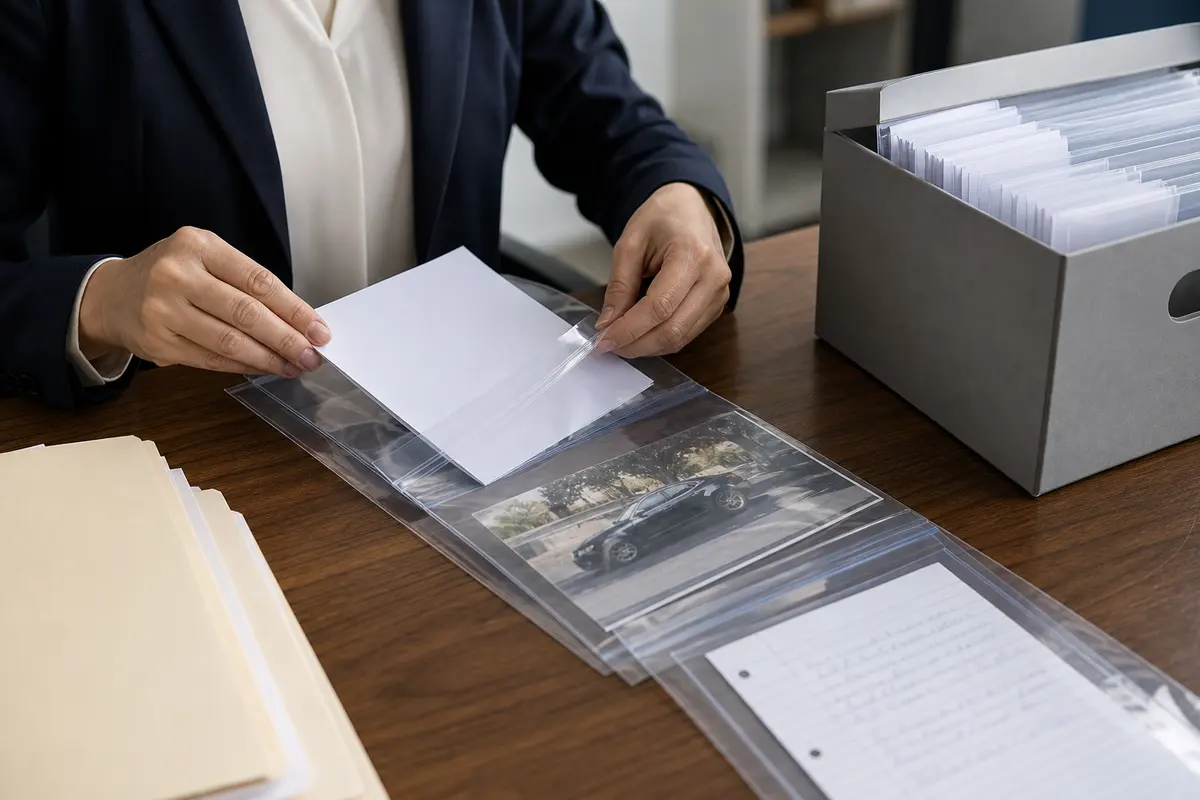
- Collect originals when possible. If you must rely on copies, make them legible and note where the originals are stored.
- Keep a running log that records when and how each document was created, received and transferred to preserve chain of custody.
- For electronic files, save native formats and record metadata such as timestamps. When converting to PDF, keep an index of original file names and metadata.
- Number exhibits consistently and cross-reference every exhibit in your trial record index and witness statements.
- Consider sworn affidavits to explain unusual documents, establish authenticity, or fix a timeline when a witness cannot attend.
Common objections at a family trial and how to respond

Anticipating typical evidentiary objections helps you preserve and explain your proof:
- Relevance: explain how the document or statement connects directly to an issue the court must decide.
- Hearsay: identify an exception or show the material is offered for a non-truth purpose, for example notice or state of mind.
- Authentication: prepare witness testimony or affidavits that establish who created the document and why it is reliable.
- Privilege: expect claims of solicitor-client or settlement privilege and be ready to narrow reliance or seek a court ruling.
When to consult a family lawyer in the GTA
Self-representation is possible for straightforward matters, but consult a lawyer if any of the following apply: complex financial disclosure, contested parenting and decision-making responsibility, expert witnesses are required, key witnesses are unavailable, or strict court timelines may be missed. A family lawyer can prepare a trial record, bring pre-trial evidence applications, and advise on admissibility risks. Naksar Law Professional Corporation offers consultations for family law matters in the Toronto and GTA area and can explain how the Rules apply to your case: Naksar Law — family law.
Next steps and a concise local contact
Final checklist before you file:
- Confirm the trial start date and count back 30 days to calculate the filing deadline.
- Complete the trial record index, include all essential documents, and label exhibits consistently.
- Preserve original documents and create a secure folder for electronic files with noted metadata.
- Decide whether any witness should give evidence before trial and be prepared to move for an order if needed.
If you would like a lawyer to review your trial record or to discuss pre-trial evidence options, visit the Naksar Law family law page to learn more about services and to book a consultation: Naksar Law Professional Corporation.
What is a trial record and when must I serve it?
A trial record is a compiled, indexed set of documents the court and parties rely on during trial. Under Rule 23 of the Family Law Rules, the applicant must serve and file the trial record at least 30 days before the start of the trial. The trial record must include the pleadings and other documents relevant to the issues at trial. See the official Rule 23 text for details: O. Reg. 114/99 Rule 23.
Can answers from Rule 20 questioning be read into evidence if a witness will not come to trial?
Yes, a judge may permit reading into evidence answers given under Rule 20 by a person who cannot or will not testify, but admission is discretionary. The judge will weigh the importance of the evidence, whether the other party had a fair opportunity to challenge it, and other fairness considerations before allowing it. See the Rules on evidence by affidavit and electronic recording: O. Reg. 114/99 v29.
How can I use documents obtained in disclosure in another case?
Evidence obtained under the Family Law Rules is generally limited to use in the case where it was obtained. To use those documents in another proceeding you must apply to the court for permission and show why the use is necessary and how privacy and fairness will be protected. See the consolidated provisions and financial disclosure rules: O. Reg. 114/99 consolidated provisions and v69.
What should I do if I miss the 30-day deadline to file a trial record?
Notify the court and the other party immediately, explain the reason for the delay, and seek consent to file late. If the other party does not agree, bring a short motion for relief from the deadline, explain any prejudice, and offer undertakings to reduce it.
Do I need an affidavit for every document I plan to rely on at trial?
Not always. Many documents can be authenticated by live witness testimony at trial. Affidavits help when witnesses cannot attend or when you need to establish a document’s authenticity before trial. Use affidavits selectively for critical exhibits or when provenance may be contested.
Talk with Naksar Law Professional Corporation
Contact Naksar Law Professional Corporation to ask about the next step and confirm which options fit your needs.